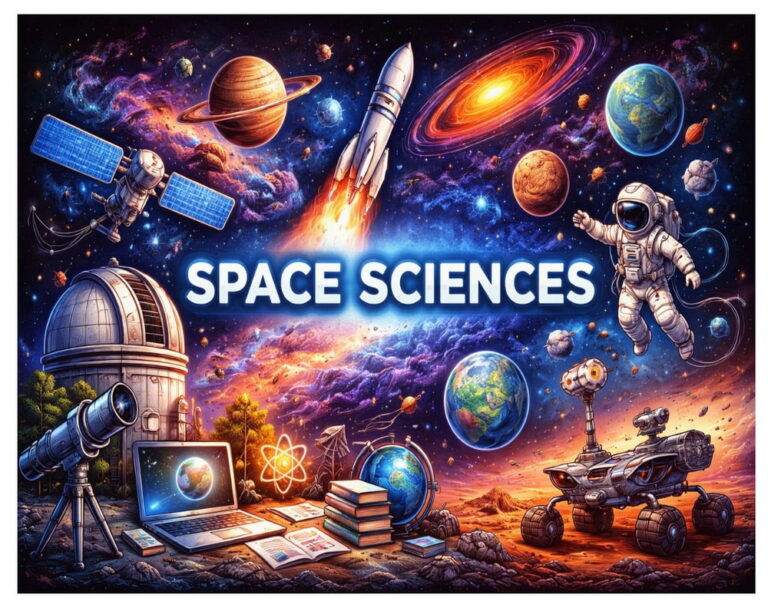
Space sciences study everything beyond Earth—from stars and planets to cosmic phenomena and space weather. While mainstream models assume vast distances and complex mechanics, alternative perspectives focus on direct observation, measurable phenomena, and logical reasoning. This blog series explores these concepts in an approachable way, encouraging readers to question assumptions and explore the cosmos with curiosity.
1. Understanding Space Weather: How the Heavens Affect Earth
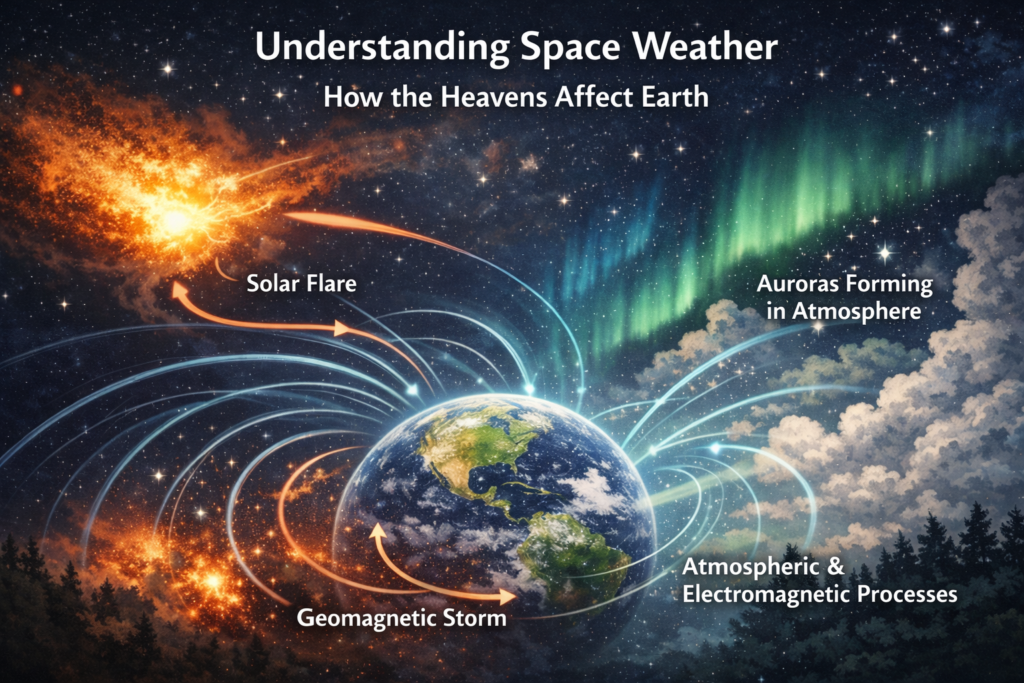
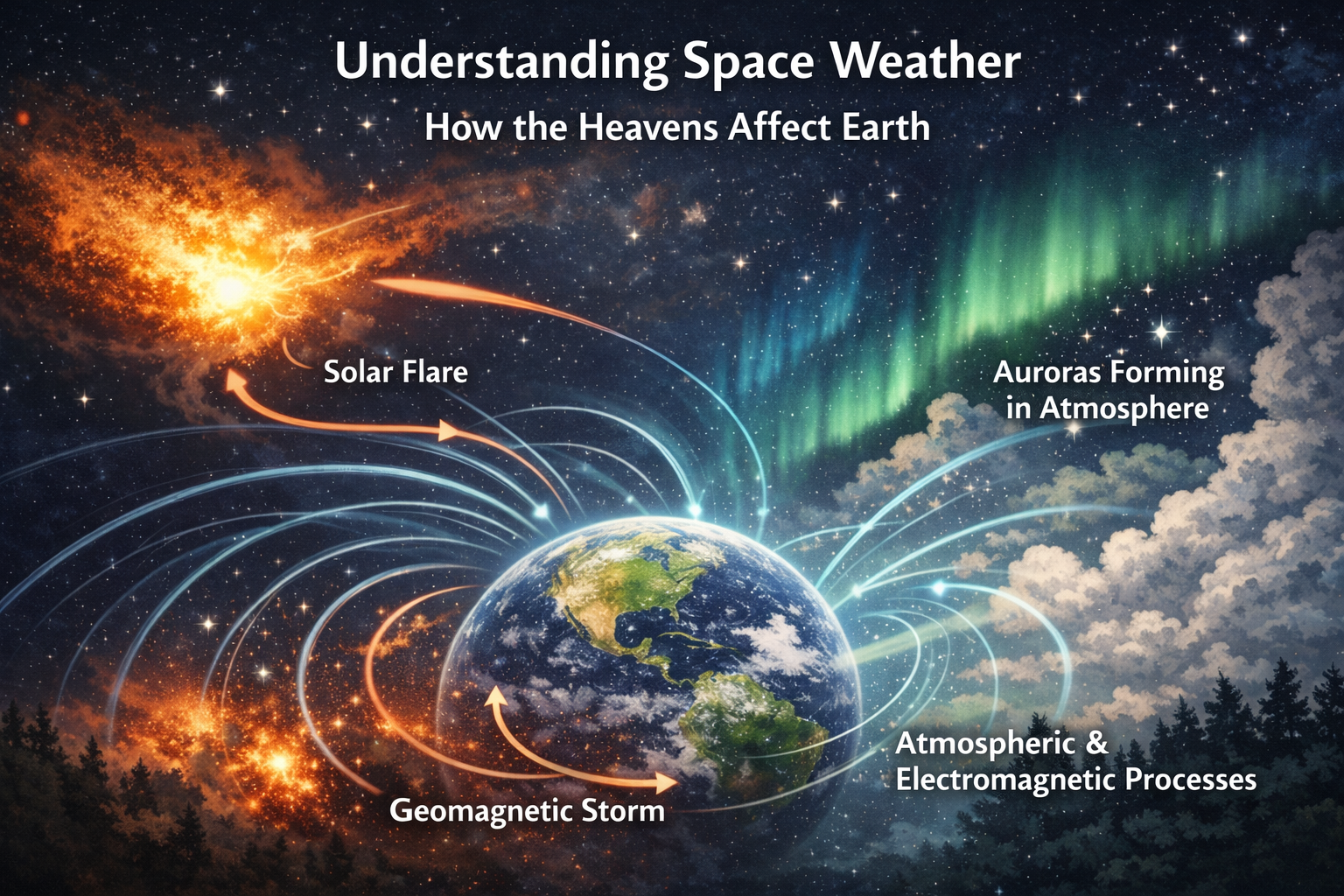
Space weather includes solar flares, auroras, and geomagnetic storms. Traditional science links these to interactions between the Sun and Earth’s magnetic field. But closer observation suggests that atmospheric and electromagnetic processes may play a larger role than usually acknowledged.
Auroras, for example, could result from local interactions in the atmosphere rather than solely from distant solar emissions. By studying patterns, intensity, and timing, we can gain insights into the dynamic relationship between Earth and the sky.
2. Stars and Celestial Lights: Rethinking Distance and Scale
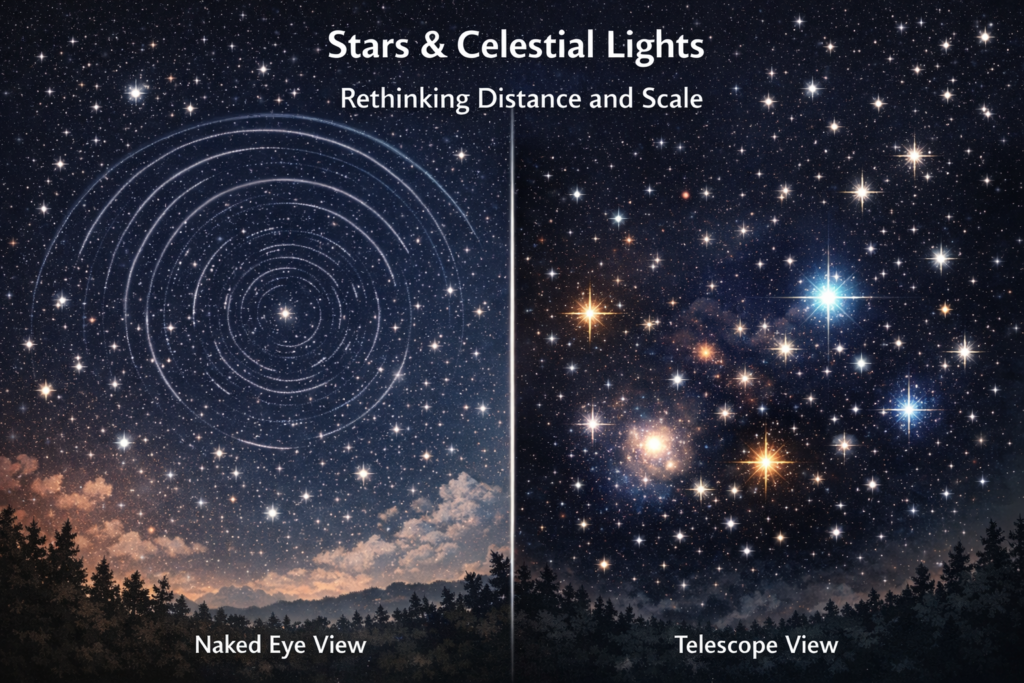
Stars appear as tiny points of light in the night sky, yet they are often described as massive, distant suns. Observation shows that apparent motion, brightness, and patterns remain remarkably consistent over time.
This raises questions about conventional distance estimates and suggests stars may behave as local luminous objects within a structured system rather than unreachable suns. Examining their behavior carefully is key to understanding the cosmos.
3. Galaxies and Deep Space: Images vs. Reality
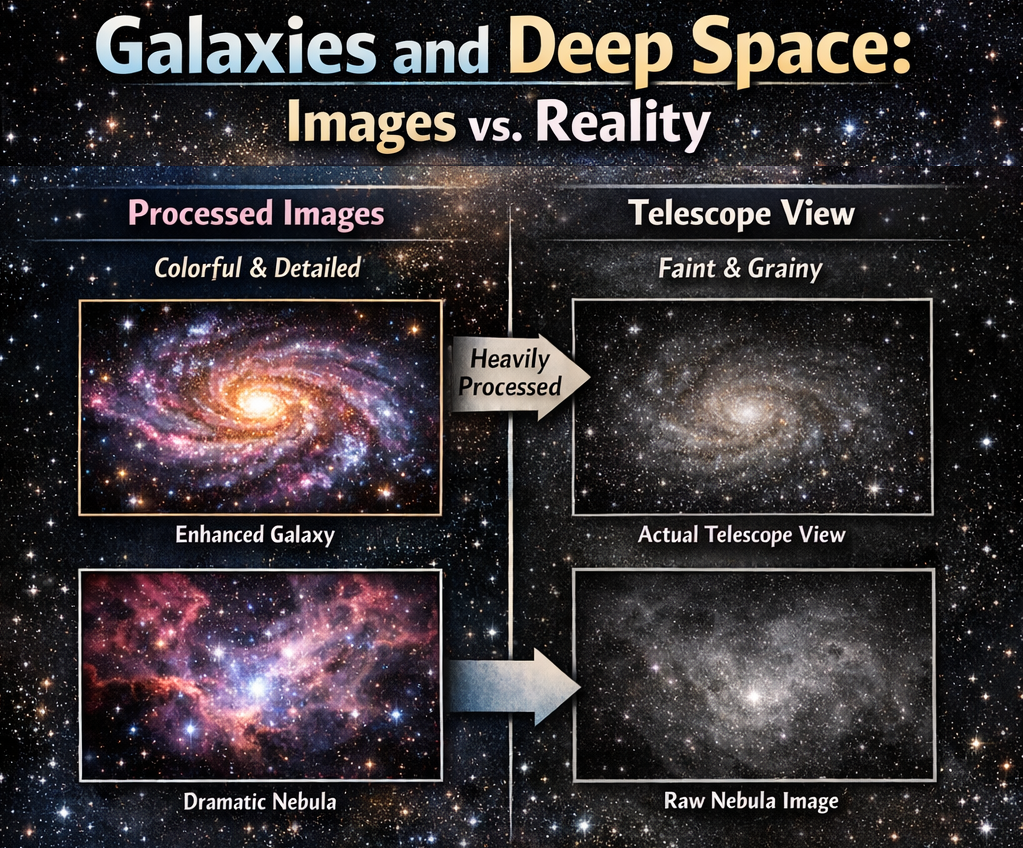
Images of galaxies and nebulae dominate popular astronomy, but many are heavily processed composites. Telescope observations often differ from published depictions, prompting questions about scale, depth, and structure.
Exploring these images critically helps readers consider how observations are interpreted and whether alternative explanations better match what we can directly measure.
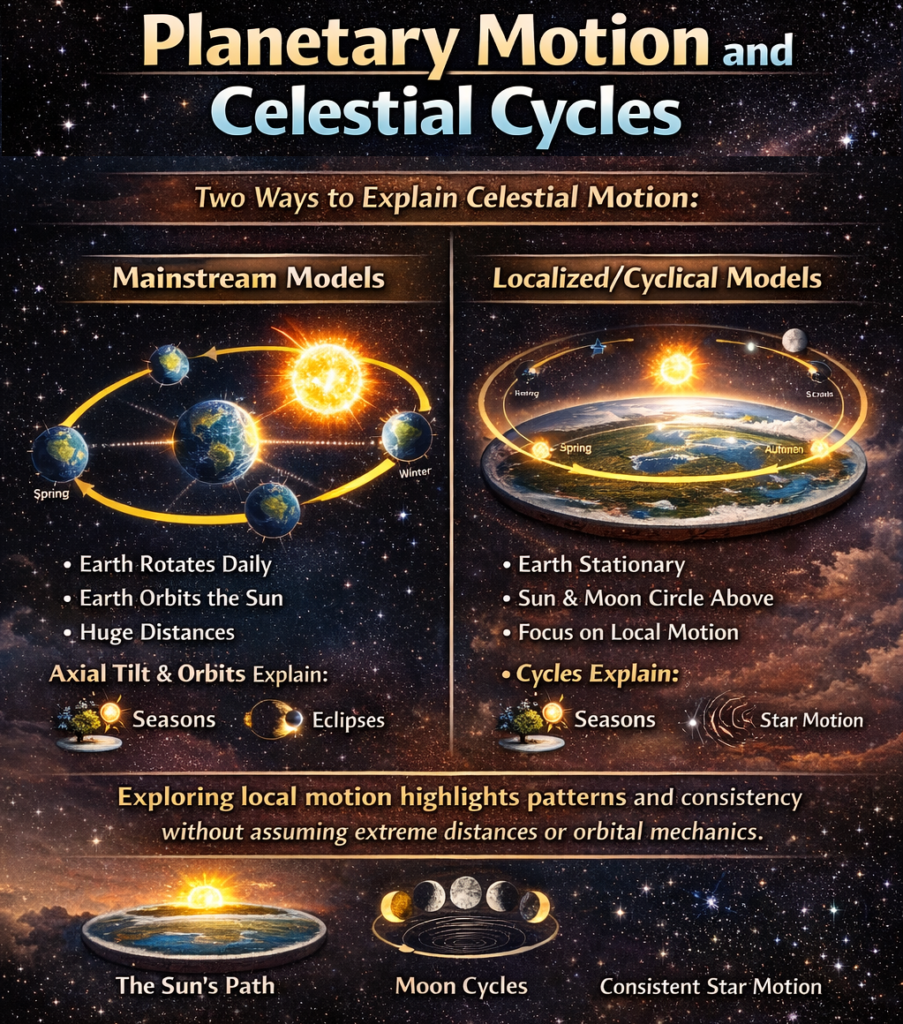
4. Planetary Motion and Celestial Cycles
Mainstream models describe Earth as rotating and orbiting the Sun, explaining seasons, eclipses, and star motion. Yet observable patterns—like the Sun’s path, Moon cycles, and consistent star motion—can also be explained through localized, cyclical models.
Focusing on observable motion highlights patterns and consistency, without relying on assumptions about extreme distances or orbital mechanics.
5. Extreme Phenomena: Black Holes, Wormholes, and Theoretical Space
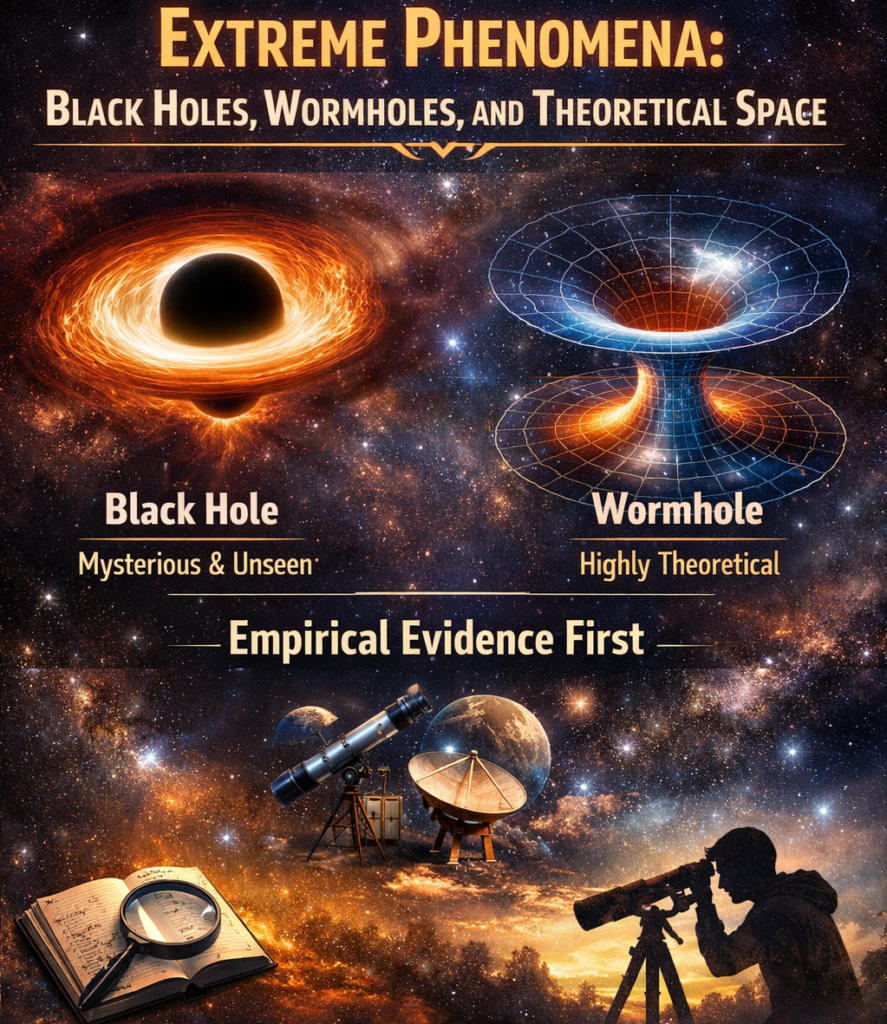
Black holes and wormholes are fascinating concepts in physics, but they remain largely theoretical and unobservable. Alternative perspectives stress empirical evidence over speculative models, encouraging studies rooted in what can be measured and verified.
This approach reminds us that understanding the universe does not always require complex mathematics or inaccessible physics, but careful observation and logical interpretation.
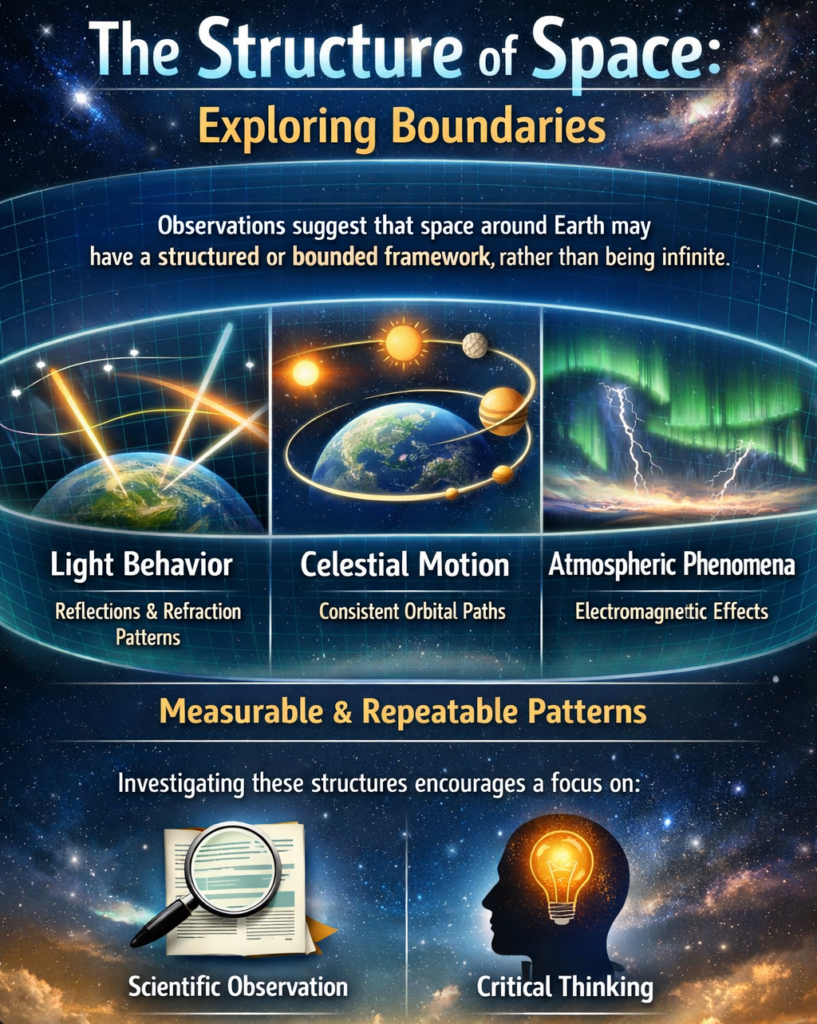
6. The Structure of Space: Exploring Boundaries
Observations suggest that space around Earth may have a structured or bounded framework, rather than being infinite. Light behavior, celestial motion, and atmospheric phenomena hint at patterns that are directly measurable and repeatable.
Investigating these structures encourages a focus on evidence-driven inquiry, highlighting the importance of observation and critical thinking in understanding the universe.
Conclusion: Observation as the Key to Space Sciences
Rethinking space sciences emphasizes observation, measurement, and logical analysis. From space weather to stars, planetary cycles, and deep-space phenomena, exploring alternative perspectives encourages curiosity, critical thinking, and open inquiry.
By focusing on what can be observed and tested, we can develop a deeper, more nuanced understanding of the universe and our place within it.
About the Author