Introduction
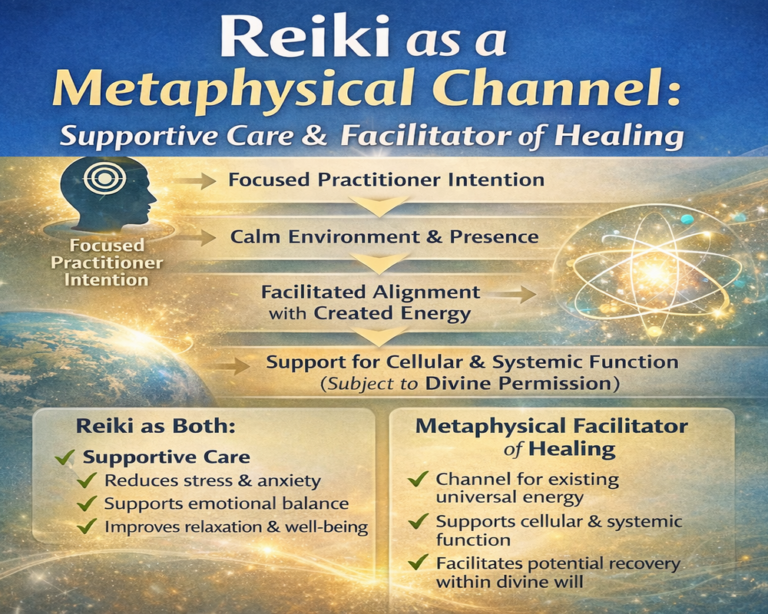
Reiki is a structured, intention-driven method of offering focused attention, calm presence, and environmental regulation. It is not a medical treatment, but it may facilitate relaxation, emotional regulation, and overall comfort.
This article outlines practical approaches, procedural considerations, and professional guidelines for using Reiki responsibly in wellness and healthcare contexts.
Core Principles of Practical Reiki
While Reiki is often perceived as mystical or spiritual, its practical framework is grounded in metaphysical science, intention, and human attention. Key principles include:
- Intention and Focus
- The practitioner maintains a clear, conscious commitment to attentiveness, calmness, and ethical support.
- Intention functions as directed attention, shaping interactions, environment, and patient experience—not as a supernatural mechanism.
- Calm Presence and Environmental Control
- A low-stimulation, quiet environment promotes relaxation and attentiveness.
- Minimal distraction supports both patient and practitioner focus.
- Hands-On or Hands-Near Interaction
- Gentle hand positions, either in light contact or hovering near the body, are used to structure attention and presence.
- These positions are standardized for comfort and consistency, not for channeling “energy.”
- Consistency and Structure
- Reiki sessions follow repeatable, structured procedures to maximize patient comfort and practitioner reliability.
Typical Reiki Session Workflow
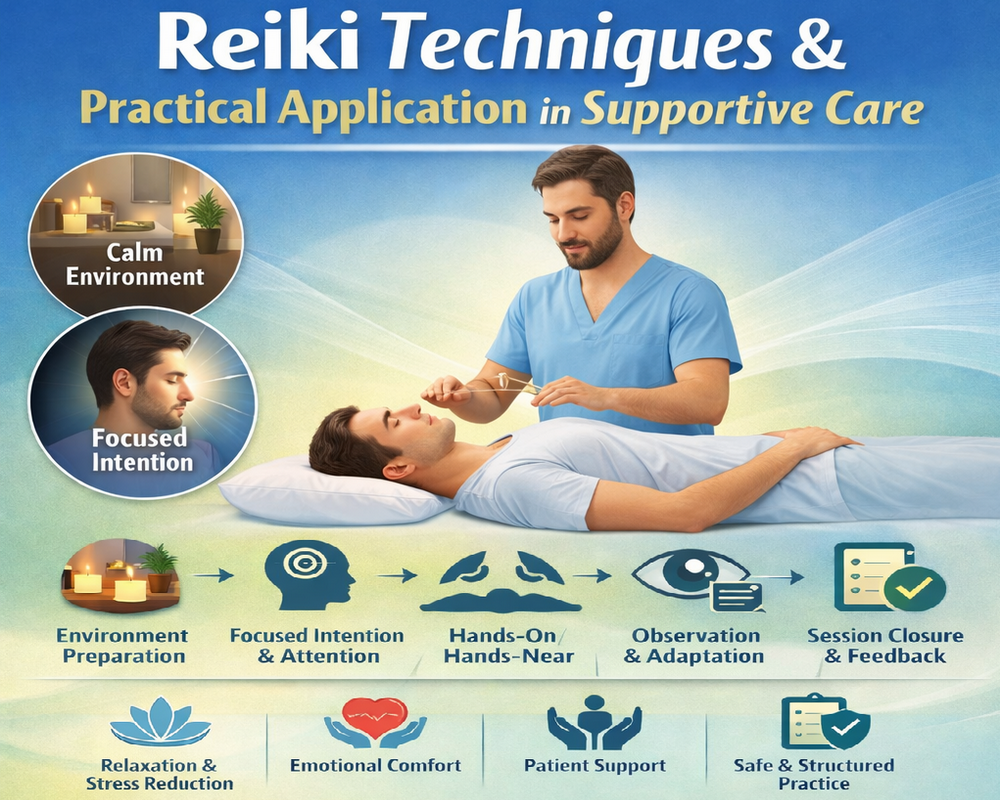
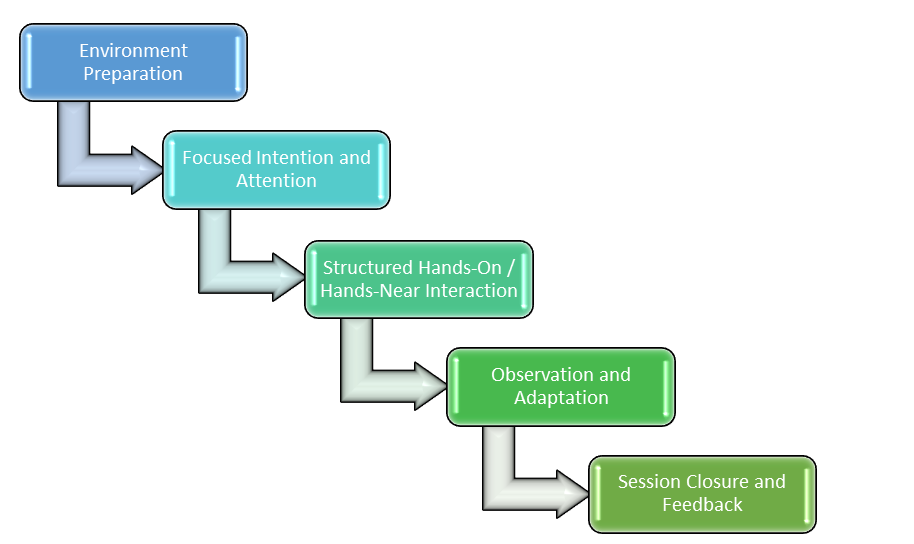
A structured session in a supportive care or wellness context may follow this flow:
Step 1: Preparation
- Practitioner ensures a calm environment and minimizes external distractions.
- Patient comfort and consent are confirmed.
Step 2: Focused Attention and Intention
- Practitioner sets a clear intention for attentive presence.
- Mental focus is maintained on calm observation and comfort facilitation.
Step 3: Structured Contact
- Hands-on or hands-near positions are applied sequentially, covering major muscle groups or body regions associated with tension.
- Duration is standardized, typically 30–45 minutes per session.
Step 4: Observation and Adaptation
- Practitioner monitors patient comfort and relaxation levels.
- Adjustments are made for optimal supportive effect.
Step 5: Session Closure
- Practitioner ensures a smooth transition back to normal activity.
- Patient feedback is obtained to assess subjective comfort and relaxation.
Visual Flowchart:
Mechanisms of Action
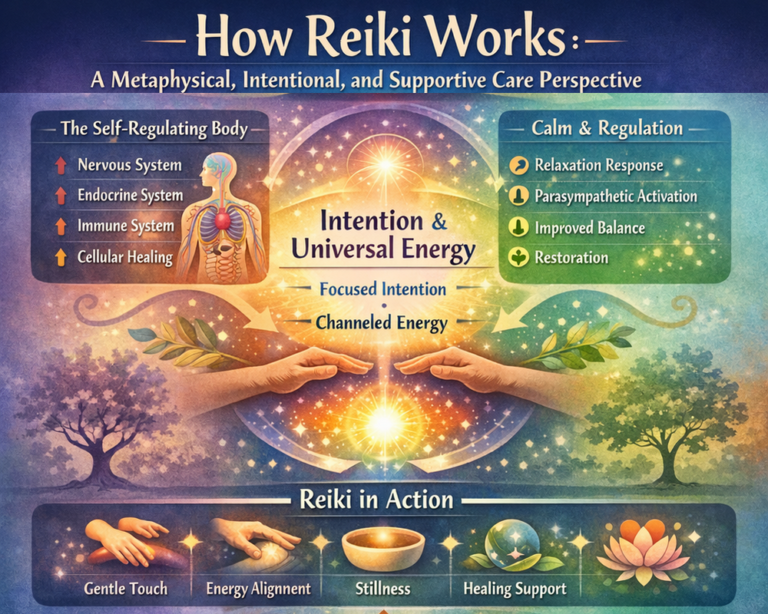
While Reiki does not introduce new energy or override biological processes, it may support the following physiological and psychological effects:
- Stress reduction through parasympathetic activation
- Improved emotional regulation by facilitating calm and focus
- Enhanced patient perception of support and comfort
- Indirect support for cellular and systemic function via improved nervous system regulation
These mechanisms align with widely recognized principles in psychology, physiology, and stress management.
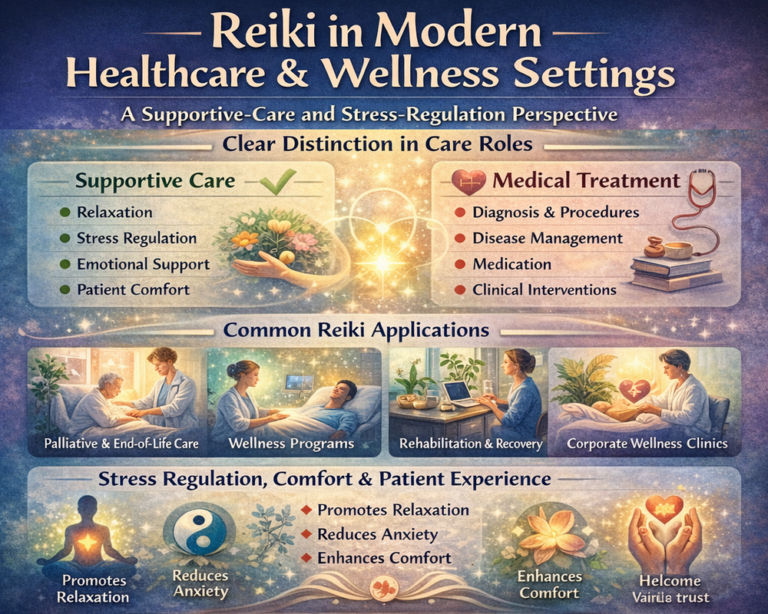
Applications in Healthcare and Wellness
Supportive Care Environments:
- Hospitals and clinics: reduce anxiety and improve patient experience
- Palliative care: enhance comfort and emotional reassurance
- Rehabilitation centers: support adherence to therapy and relaxation
Wellness Environments:
- Corporate wellness programs
- Stress management workshops
- Community and lifestyle clinics
In each context, Reiki is complementary, not substitutive, and is carefully framed to support well-being alongside other interventions.
Practitioner Guidelines
Professional Reiki practice emphasizes:
- Informed consent and transparency
- Clear separation from medical treatment or claims of cure
- Ethical conduct, boundaries, and patient-centered focus
- Record-keeping and session documentation for quality assurance
These standards ensure both patient safety and professional credibility.
Limitations and Ethical Considerations
- Reiki does not diagnose or treat medical conditions.
- Outcomes are variable and never guaranteed.
- Reiki must never replace evidence-based care or medical advice.
- Misrepresentation as a therapeutic cure undermines ethical practice.
Closing Perspective
Reiki, when applied as a structured, intention-based, supportive practice, offers a reliable framework for relaxation, emotional comfort, and stress reduction. Its value lies in human attentiveness, environmental control, and intentional presence, rather than supernatural or mystical claims. Practiced ethically, Reiki complements modern healthcare and wellness initiatives, enhancing patient-centered care without overstepping professional or medical boundaries.
About the Author