A Supportive-Care and Stress-Regulation Perspective
As healthcare systems increasingly recognize the importance of emotional well-being, stress management, and patient comfort, complementary and supportive practices have gained structured attention. Reiki is one such practice that has entered selected healthcare and wellness environments—not as a medical treatment, but as a non-invasive, comfort-oriented supportive method.
When stripped of spiritual or mystical claims, Reiki can be understood as a structured approach to focused attention, calm presence, and environmental regulation, aimed at supporting relaxation and reducing psychological stress. This article examines where Reiki fits within modern healthcare, the conditions under which it may be applied responsibly, and the professional boundaries that must be maintained.
The Shift Toward Holistic and Patient-Centred Care
Contemporary healthcare has evolved beyond symptom control alone. Increasing emphasis is placed on:
- Patient comfort and emotional well-being
- Stress reduction during illness, treatment, and recovery
- Quality of life in chronic and long-term conditions
- Patient-centered and dignity-focused care models
Within this framework, practices that support calmness—such as guided breathing, reassurance, therapeutic presence, and relaxation techniques—are increasingly integrated into care environments.
When framed appropriately, Reiki aligns with this shift as a supportive, non-clinical method, not as a therapeutic intervention.
Reiki in Clinical and Institutional Environments
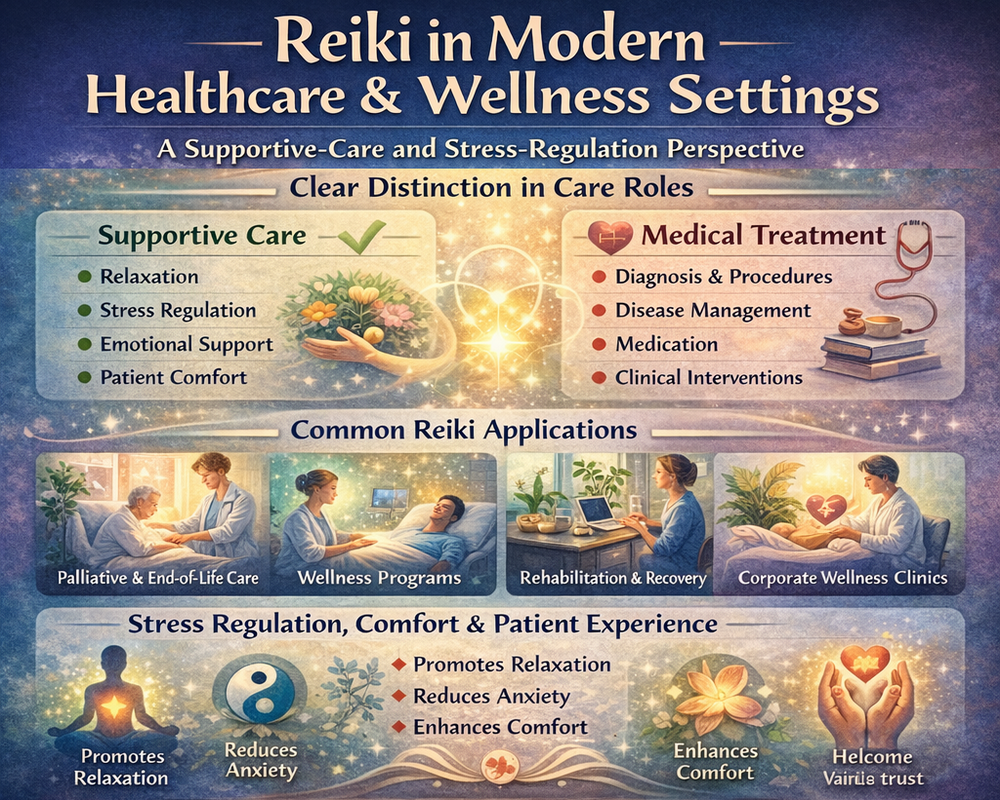
In certain hospitals, hospices, and wellness centers, Reiki is offered under defined institutional guidelines. In these settings, Reiki is typically used:
- To promote relaxation
- To reduce anxiety and emotional distress
- To enhance patient comfort
- As part of integrative or supportive-care programs
Importantly, Reiki sessions in professional environments are standardized, supervised, and governed by institutional policies. The practice is positioned alongside other comfort-focused interventions rather than within clinical treatment pathways.
Supportive Care Versus Medical Treatment
A critical distinction in healthcare practice is the difference between supportive care and medical treatment.
Supportive Care Focuses on:
- Comfort and reassurance
- Emotional stability
- Stress regulation
- Patient experience
Medical Treatment Focuses on:
- Diagnosis and clinical assessment
- Medication and procedures
- Disease management
- Evidence-based interventions
Reiki belongs exclusively to the first category. It does not diagnose conditions, prescribe remedies, or influence clinical decision-making. Its ethical application depends on maintaining this boundary at all times.
Stress Regulation and Patient Experience
Stress is widely recognized as a factor that can influence immune function, recovery, pain perception, and overall patient experience. Healthcare environments—by nature—can generate anxiety, uncertainty, and emotional strain.
Within this context, Reiki may support care by:
- Encouraging relaxation responses
- Reducing perceived anxiety
- Supporting calm breathing and heart-rate regulation
- Enhancing subjective comfort during care
These effects are consistent with established principles of stress reduction and nervous-system regulation, rather than unique or unexplained mechanisms.
Use in Palliative and Comfort-Focused Care
One of the most common applications of Reiki in healthcare is within palliative and supportive-care settings. In such contexts, the primary goals are:
- Comfort and dignity
- Emotional reassurance
- Reduction of distress
- Support for patients and families
When applied ethically, Reiki may contribute to a sense of calm presence without interfering with medical management or end-of-life decision-making. Its value lies in human attentiveness, not in claims of cure.
Reiki in Wellness and Preventive Settings
Outside clinical institutions, Reiki is more commonly offered in wellness environments, including:
- Stress-management programs
- Corporate wellness initiatives
- Rehabilitation and recovery centers
- Community wellness clinics
In these settings, Reiki is often positioned alongside:
- Mindfulness practices
- Breathing and relaxation exercises
- Lifestyle and stress-management coaching
Its appeal lies in its simplicity, non-invasive nature, and emphasis on focused attention and calm interaction.
Practitioner Training and Professional Accountability
When Reiki is offered in healthcare or institutional contexts, practitioners are often required to meet defined standards, including:
- Formal training and certification
- Understanding of ethical and professional boundaries
- Knowledge of patient safety and institutional protocols
- Clear, non-misleading communication
Some organizations also require supervision, background verification, and periodic review to ensure compliance with professional standards.
Safety, Ethics, and Clear Limitations
Reiki is generally considered low-risk when practiced responsibly. However, safety depends on strict adherence to limitations, including:
- No physical manipulation or invasive contact
- No medical advice or diagnosis
- No promises of healing or cure
- Immediate referral to medical professionals when concerns arise
Misrepresentation or exaggerated claims undermine both patient safety and institutional credibility.
Reiki Within Integrative Care Models
Integrative care models seek to combine conventional medicine with evidence-informed supportive practices. In such models:
- Medical professionals retain full authority over diagnosis and treatment
- Supportive practices address comfort and emotional needs
- Clear communication ensures coordination and safety
Reiki may fit within these models only when its role is clearly defined as supportive, non-therapeutic, and non-substitutive.
Professional Responsibility and Public Communication
As Reiki gains visibility, practitioners and institutions carry a responsibility to prevent misinformation. Public trust depends on:
- Accurate, restrained descriptions of Reiki
- Transparency regarding limitations
- Avoidance of spiritual, mystical, or exaggerated claims
Responsible presentation protects patients, practitioners, and the integrity of supportive-care programs.
Closing Perspective
Reiki’s place in modern healthcare and wellness settings is not as a cure, treatment, or spiritual practice, but as a structured, intention-based method of supportive presence that may help reduce stress and enhance comfort.
When presented ethically and practiced within professional boundaries, Reiki can coexist with conventional healthcare—contributing to a more humane, patient-centred care experience without compromising scientific or medical standards.
About the Author