Introduction
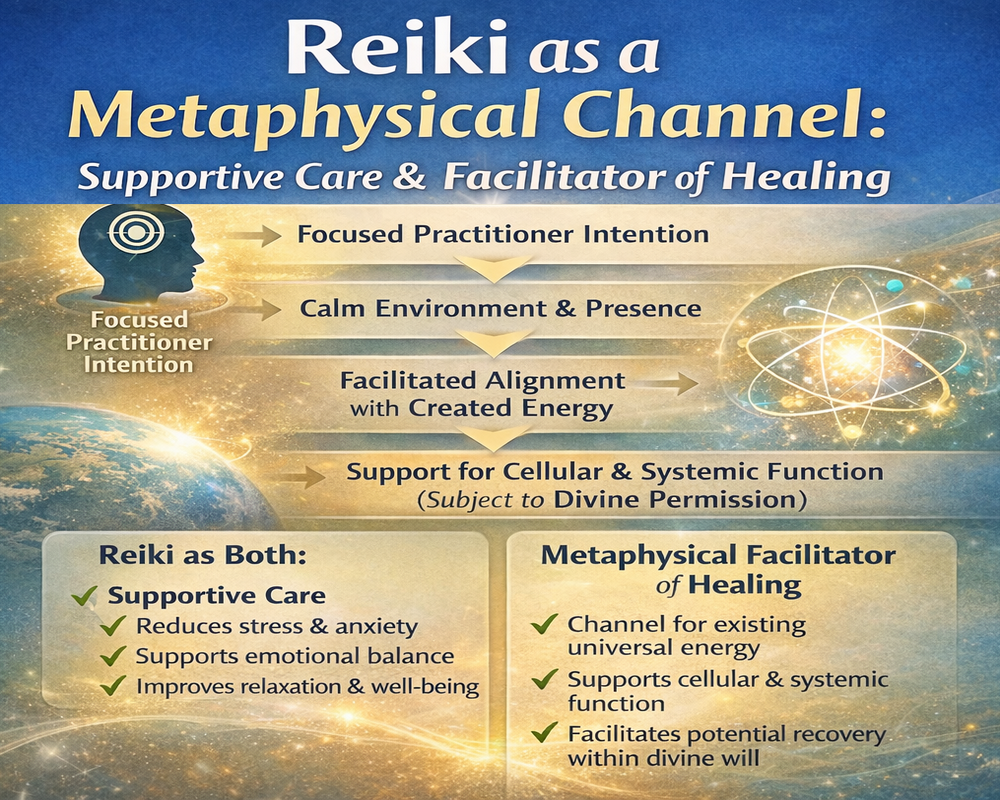
This dual framework positions Reiki as both:
- Supportive Care – promoting relaxation, emotional balance, and well-being.
- A Metaphysical Facilitator – a structured effort to align with universal energy systems created by God, which may contribute to benefit and recovery under His permission.
It is crucial to clarify: healing, benefit, and recovery ultimately originate from God; human action, including Reiki, serves only as an intentional means (asbāb) to support these processes.
Reiki as a Metaphysical Channel
Modern physics and biology recognize that all matter and life processes are energy-dependent. At the atomic level, electrons revolve around nuclei, molecules interact through energy transfers, and cells rely on energy for proper function. When energy distribution is disrupted—due to stress, injury, or fatigue—cellular efficiency may decrease, affecting tissues, organs, and systemic function.
Within this context, Reiki is conceptualized as a metaphysical channel, a method through which a practitioner uses focused attention and structured intention to facilitate the flow of universal energy. This energy is not mystical or autonomous, but a created, law-governed system present in the universe. Reiki, therefore, operates as a conduit rather than a source:
- Channeling, not generating: Reiki does not create energy; it guides interaction with pre-existing energy systems.
- Intentional alignment: Practitioners align their focus and attention to assist the natural flow of energy.
- Ethical facilitation: Reiki works only as a supportive measure; outcomes remain subject to divine permission and the body’s own systems.
Dual Role of Reiki: Supportive Care and Facilitator
1. Supportive Care
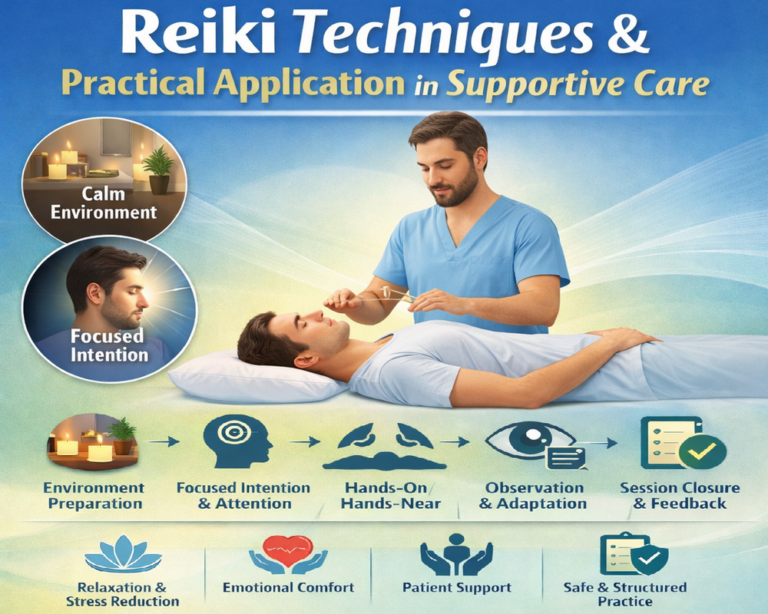
Reiki provides an intentional, structured environment that promotes:
- Stress reduction and relaxation
- Emotional stability and comfort
- Enhanced receptivity to self-regulation and healing
- Improved psychological and physiological readiness
This supportive role aligns with principles already recognized in healthcare, such as mindfulness, therapeutic presence, and patient-centered interventions.
2. Metaphysical Facilitation of Benefit
Beyond stress reduction, Reiki may serve as a facilitator of benefit through universal energy:
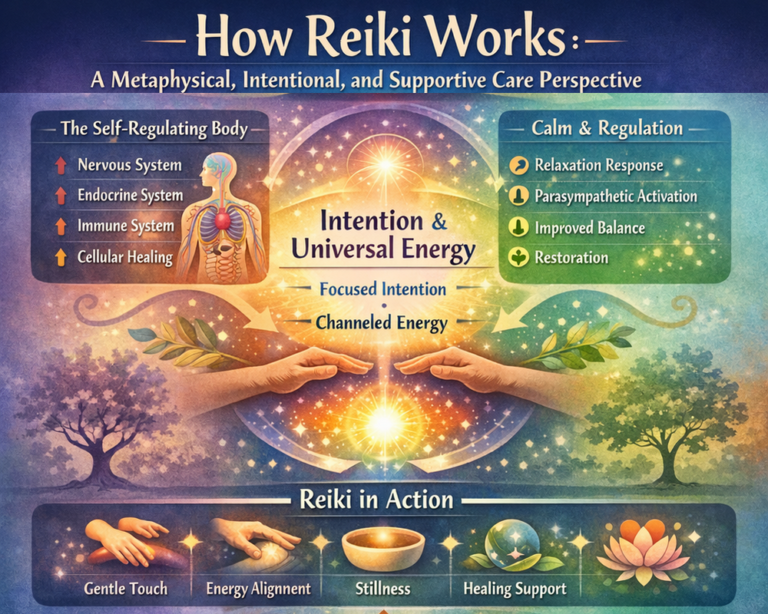
- Cellular-level support: By assisting the natural energetic interactions within cells, tissues, and organs, Reiki may help optimize cellular function.
- Systemic integration: Focused attention may harmonize interactions between nervous, endocrine, and immune systems.
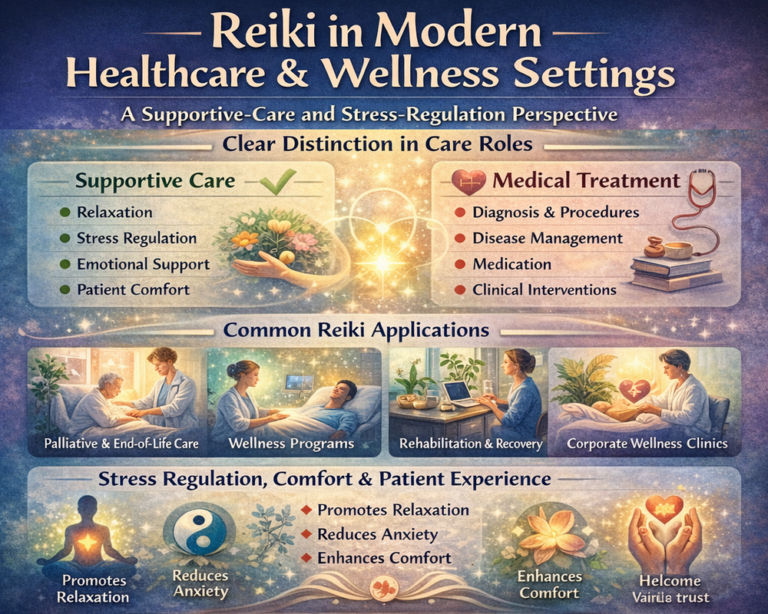
- Complementary, not substitutive: Reiki complements medical treatment; it does not replace or override diagnostic, pharmaceutical, or surgical interventions.
This perspective frames Reiki as a structured, intentional, and metaphysical practice grounded in natural law, not a supernatural or independent force.
The Functional Mechanism: Attention, Intention, and Interaction
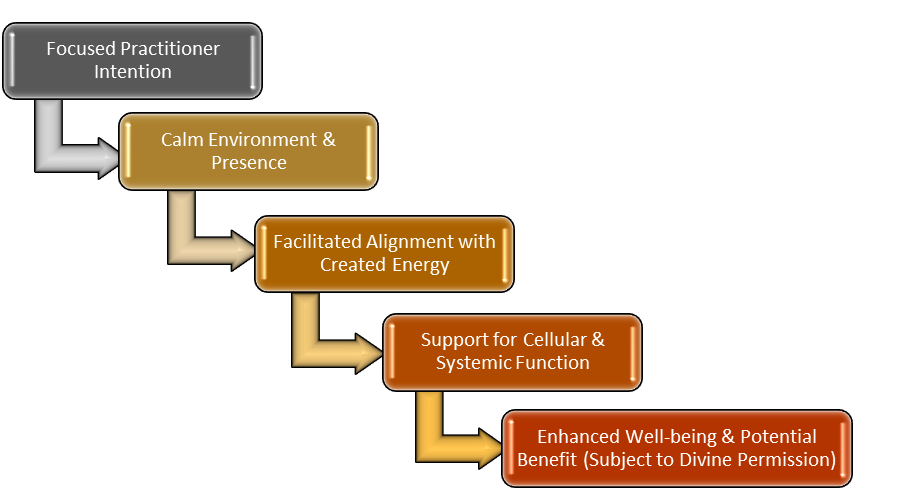
Reiki’s efficacy depends on:
- Focused Human Attention – the practitioner directs calm and compassionate attention to the patient.
- Intention as Alignment – intention is defined functionally: deliberate mental focus, emotional regulation, and ethical care.
- Interaction with Created Energy Systems – energy exists inherently in biological and universal systems; Reiki facilitates its optimal alignment.
By integrating these components, Reiki provides an environment conducive to recovery, support, and enhanced well-being, without claiming deterministic outcomes.
Practical Implications in Healthcare and Wellness
In modern wellness and healthcare environments, Reiki can be responsibly implemented:
- Stress-management programs: Encourages calm, reduces mental and physical tension.
- Palliative and supportive care: Enhances comfort, reassurance, and emotional stability.
- Integrative health programs: Complements conventional medical care by addressing the non-physical dimensions of patient experience.
- Wellness and mindfulness centers: Provides structured intentional practice for relaxation and self-regulation.
Ethical Boundaries and Limitations
It is essential to maintain clear boundaries:
- Reiki does not diagnose or treat disease independently.
- It does not guarantee outcomes; results vary based on individual health, medical care, and divine will.
- It should always supplement, not replace, conventional care.
Practitioners must maintain professional ethics, informed consent, and patient safety.
Visual Model: Reiki as Metaphysical Support
Conclusion
Reiki, redefined as a metaphysical channel, provides both supportive care and a structured means of engaging with created universal energy. By combining intention, attention, and ethical facilitation, Reiki can help reduce stress, promote relaxation, and create conditions that support recovery. However, it is not autonomous healing—benefit occurs through natural systems and ultimately by the will of God. This balanced perspective allows Reiki to be practiced responsibly, evaluated critically, and integrated with modern healthcare while honoring both metaphysical principles and biological realities.
About the Author