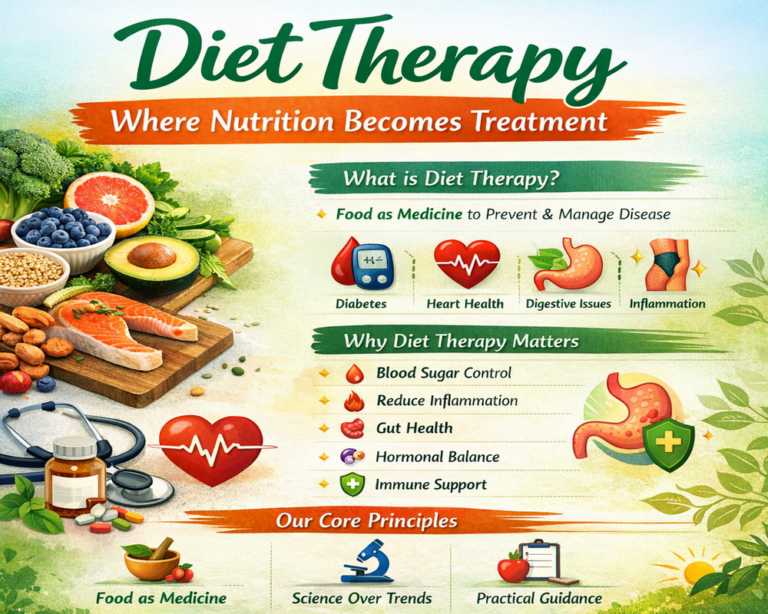
When we hear the phrase “food is medicine,” it may sound inspirational—but in diet therapy, it is a scientific reality. Every meal we consume triggers a cascade of biochemical reactions that influence metabolism, hormones, inflammation, immunity, and overall health.
Diet therapy is not based on assumptions or trends. It is rooted in nutritional science, human physiology, and clinical application, making food a deliberate therapeutic tool rather than a passive lifestyle choice.
This article explores how diet therapy works inside the body and why nutrition plays a central role in both disease prevention and management.
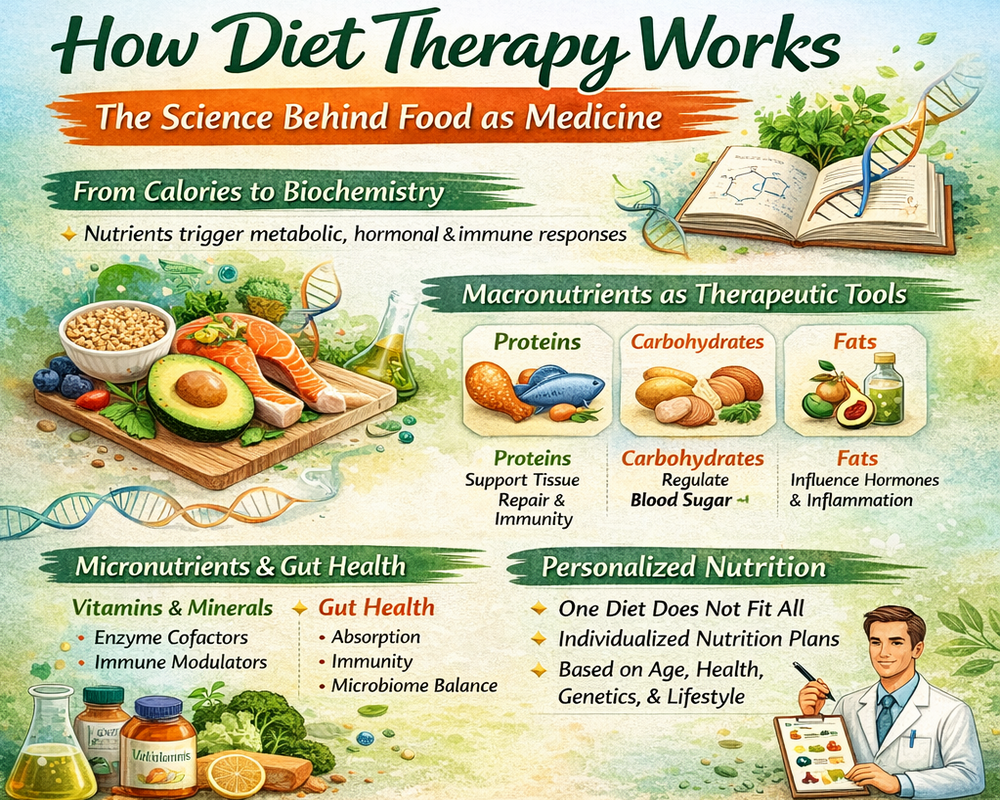
From Calories to Biochemistry
Food is often reduced to calories, but calories alone do not define health outcomes. Two diets with the same calorie count can produce very different physiological effects.
When we eat, food:
- Activates digestive enzymes
- Influences blood sugar and insulin levels
- Regulates inflammatory pathways
- Signals hormonal responses
- Interacts with gut microbiota
Diet therapy focuses on how nutrients behave inside the body, not just how much energy they provide.
Macronutrients as Therapeutic Tools
In diet therapy, macronutrients are used strategically, not generically.
Proteins
- Support tissue repair and muscle maintenance
- Form enzymes, hormones, and antibodies
- Aid immune function and metabolic stability
Adequate and high-quality protein is essential in healing, recovery, and chronic disease management.
Carbohydrates
- Primary regulators of blood glucose
- Directly affect insulin response
- Influence energy levels and brain function
In therapeutic nutrition, carbohydrate type, timing, and quantity matter far more than simple inclusion or exclusion.
Fats
- Essential for hormone production
- Support brain and nervous system health
- Play a key role in inflammation control
The focus is not on avoiding fat, but on choosing fats that support metabolic and cardiovascular health.
Micronutrients: Small Elements, Major Impact
Vitamins and minerals may be required in small amounts, but their influence is profound.
They function as:
- Enzyme cofactors
- Antioxidants
- Immune modulators
- Regulators of nerve and muscle function
Deficiencies in micronutrients can contribute to fatigue, poor immunity, hormonal imbalance, and delayed healing. Diet therapy ensures nutrient adequacy through food first, rather than relying solely on supplementation.
Gut Health: The Foundation of Diet Therapy
A healthy digestive system is the cornerstone of effective nutrition.
The gut:
- Determines nutrient absorption
- Houses a large portion of the immune system
- Communicates with the brain and hormonal systems
An imbalanced gut can impair digestion, increase inflammation, and reduce the effectiveness of even the best diet plans. Diet therapy addresses gut health through:
- Fiber-rich foods
- Balanced macronutrient intake
- Gut-supportive dietary patterns
Without a functional gut, therapeutic nutrition cannot achieve its full potential.
Personalized Nutrition: One Diet Does Not Fit All
One of the defining principles of diet therapy is individualization.
Nutritional needs vary based on:
- Age and gender
- Medical conditions
- Metabolic health
- Lifestyle and physical activity
- Cultural and dietary preferences
What benefits one individual may be ineffective—or even harmful—for another. Diet therapy moves beyond generic advice and tailors nutrition to the individual’s physiology and health goals.
Preparing for Therapeutic Diets
Understanding how food works within the body lays the groundwork for condition-specific diet therapy.
In upcoming articles, we will explore:
- Diet therapy for blood sugar control and diabetes
- Therapeutic nutrition for gut and digestive disorders
- Anti-inflammatory dietary strategies
- Nutrition for hormonal balance and metabolic health
Each of these approaches builds upon the scientific principles discussed here.
Final Thoughts
Diet therapy transforms food from a routine habit into a deliberate healing intervention. When nutrition is applied with knowledge, structure, and personalization, it becomes one of the most powerful tools for long-term health.
This blog aims to guide you step by step toward understanding and applying therapeutic nutrition in a practical, sustainable way.
About the Author