How does Reiki work?
This question has often been obscured by exaggerated claims on one side and over-reduction on the other. Reiki is sometimes described either as a mystical force beyond explanation or dismissed as nothing more than placebo or relaxation. Neither position adequately reflects a balanced understanding.
In this article, Reiki is examined through a metaphysical and intention-based framework, integrated with modern biology, psychology, and healthcare ethics. Reiki is presented as a structured method that combines focused human intention with interaction with created universal energy, while also supporting the body’s natural regulatory processes.
The Human Body as a Self-Regulating, Energy-Dependent System
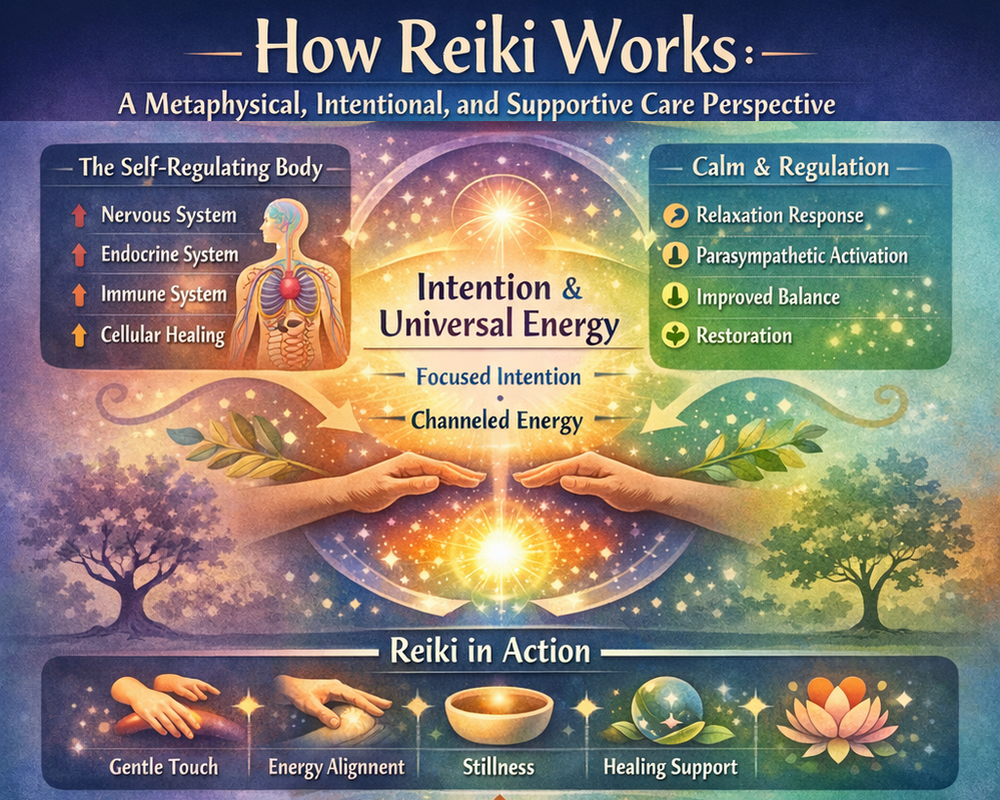
The human body is a highly complex, self-regulating system designed to maintain internal balance, commonly referred to as homeostasis. This balance depends on the coordinated function of:
- The nervous system
- The endocrine (hormonal) system
- The immune system
- Cellular repair and regeneration mechanisms
All of these systems are energy-dependent. Electrical signaling, biochemical reactions, molecular transport, and cellular communication require precise energetic balance to function efficiently.
Under normal conditions, these systems continuously adapt to internal and external changes. However, physical illness, emotional strain, psychological stress, or prolonged fatigue can disrupt this balance.
Stress, Energy Disruption, and Functional Decline
Scientific research clearly shows that prolonged stress disrupts both physiological regulation and energy efficiency by:
- Over activating the sympathetic nervous system (fight-or-flight response)
- Elevating stress hormones such as cortisol
- Suppressing immune signalling
- Impairing sleep, digestion, and tissue repair
- Increasing muscle tension and pain sensitivity
Stress does not merely affect mood; it alters how energy is distributed, utilized, and regulated across biological systems. Even in the absence of diagnosed disease, stress alone can reduce functional efficiency at cellular and systemic levels.
Calmness, Regulation, and Energetic Balance
Conversely, calmness activates the parasympathetic nervous system, often described as the “rest and restore” response. This state is associated with:
- Slower heart rate and breathing
- Reduced muscular tension
- Improved circulation and oxygen delivery
- Enhanced immune and hormonal balance
- Improved emotional regulation
Many established healthcare practices already rely on this principle, including controlled breathing, relaxation therapy, therapeutic touch, and reassurance.
Reiki operates within this same physiological domain—while extending beyond it through intentional interaction with universal energy.
Reiki as a Structured Metaphysical Practice
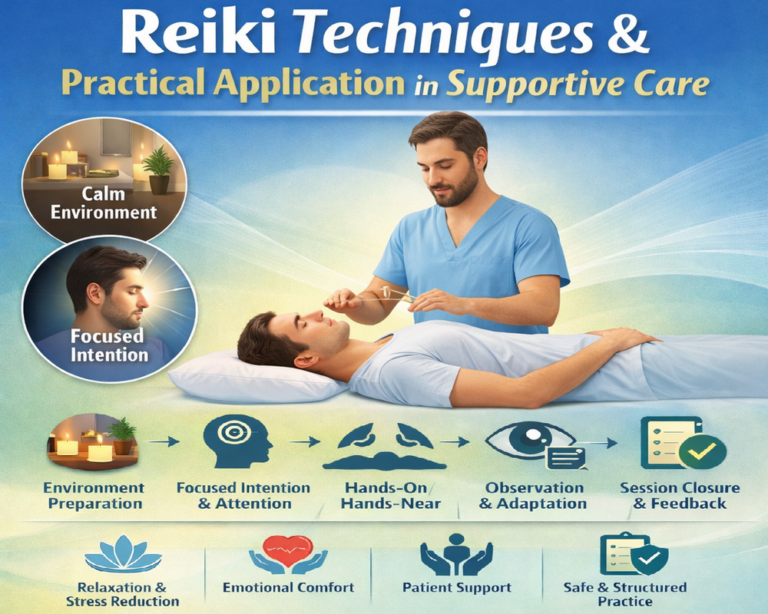
From a practical standpoint, Reiki is best understood as a structured method of intentional alignment, combining:
- A calm, low-stimulation environment
- Focused and sustained attention by the practitioner
- Gentle hands-on or hands-near positioning
- Stillness and minimal verbal interference
These elements are not random. They create conditions that reduce internal noise, stabilize nervous system activity, and increase receptivity at both psychological and energetic levels.
Reiki formalizes these elements into a consistent, repeatable practice—distinguishing it from casual relaxation techniques.
Energy and Reiki’s Mode of Interaction
All biological systems exist within a universe governed by energy. From atomic structure to cellular signaling, energy is fundamental to life itself.
In this framework:
- Universal energy is a created phenomenon, not an independent power
- It operates under fixed laws and limitations
- It does not act independently of divine will
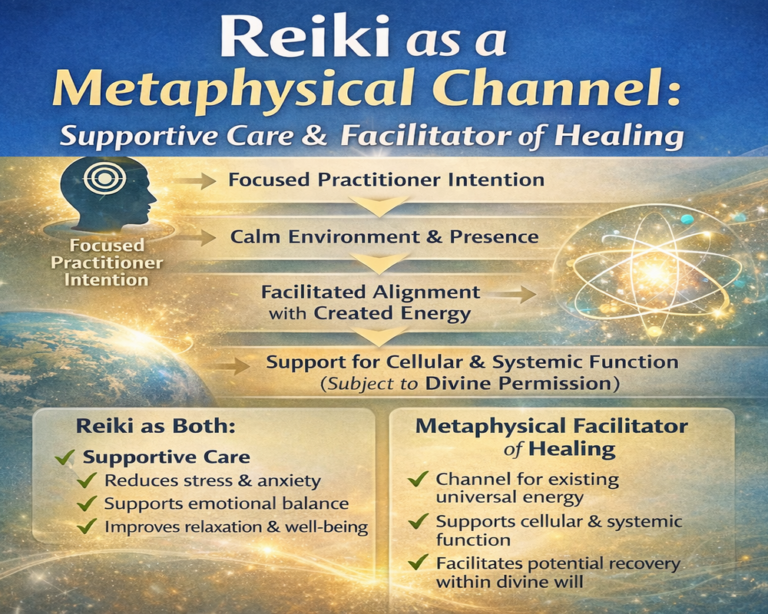
Reiki does not claim to generate energy. Instead, it functions as an intentional effort to align with and channel existing universal energy, allowing it to interact more harmoniously with biological systems.
This interaction is facilitative, not controlling.
Does Reiki “Add” Energy?
Reiki does not introduce a new or foreign energy into the body. Biological energy already exists at cellular and systemic levels through electrical gradients, molecular energy exchange, and metabolic processes.
What Reiki may do is:
- Reduce interference caused by stress and overload
- Improve energetic coherence and flow
- Support more efficient use of existing biological energy
In this sense, Reiki does not cause healing; it may help remove obstacles that limit the body’s natural capacity to regulate and recover.
Intention as a Directing Mechanism
Intention plays a central role in Reiki, but intention is understood here functionally, not symbolically or mystically.
Intention refers to:
- Directed mental focus
- Conscious attentiveness
- Deliberate alignment of action and awareness
- Regulation of emotional and cognitive states
Research increasingly shows that focused attention can influence nervous system activity, stress response, and physiological regulation. In Reiki, intention acts as a directing mechanism—shaping how energy, attention, and presence are applied.
Intention does not override biology; it interacts with it.
Reiki as Supportive Care and Healing Means
Within this revised understanding, Reiki functions on two interconnected levels:
1. Supportive Care
- Reduces psychological and physiological stress
- Encourages calmness and regulation
- Enhances emotional comfort
- Improves receptivity to recovery processes
2. Healing Means
- Acts as a channel for created universal energy
- Supports energetic balance at cellular and systemic levels
- Operates within metaphysical laws
- Produces benefit only by divine permission
These roles complement medical care rather than compete with it.
What Reiki Does—and Does Not—Do
Reiki May Support:
- Relaxation and emotional comfort
- Stress reduction
- Improved sense of balance and well-being
- Enhanced patient experience alongside medical care
Reiki Does Not:
- Diagnose medical conditions
- Replace medical treatment
- Guarantee healing outcomes
- Override biological or clinical realities
Clear boundaries are essential for ethical and responsible practice.
A Functional Model of How Reiki Works
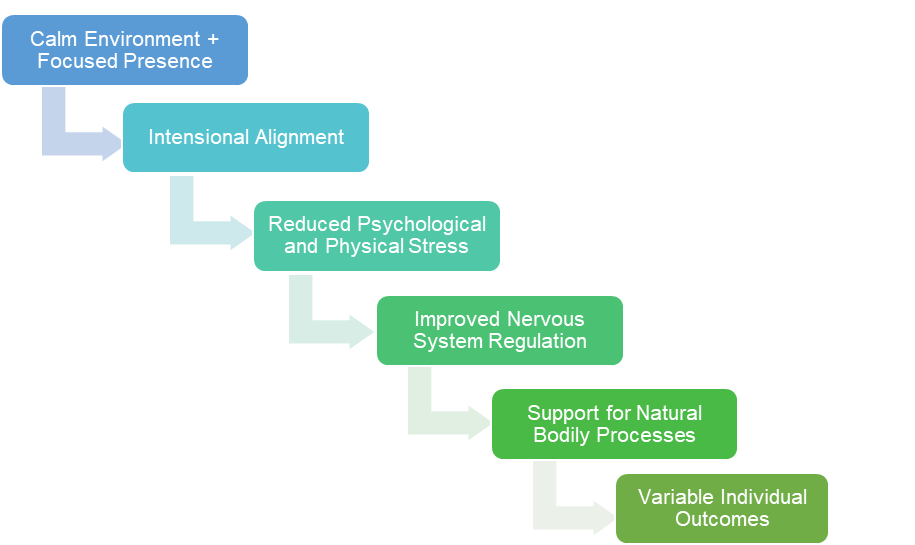
This model reflects a key principle: human effort is a means, not a cause. Outcomes depend on multiple factors and are never guaranteed.
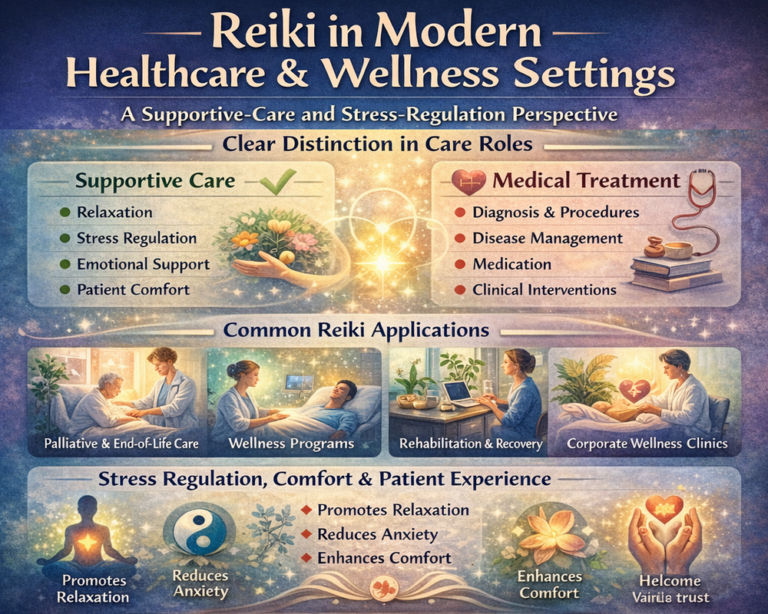
Reiki in Contemporary Care Settings
When practiced responsibly, Reiki is increasingly positioned within:
- Stress-management programs
- Supportive and palliative care
- Wellness and mindfulness initiatives
- Complementary care environments
In these contexts, Reiki is valued not as a cure, but as a non-invasive, intention-based support practice.
Closing Perspective
Reiki works not by invoking mysticism or bypassing biology, but by combining focused human intention with alignment to created universal energy, while reducing stress and supporting regulation. When stripped of exaggeration and placed within a metaphysical-scientific framework, Reiki becomes understandable, ethically defensible, and compatible with modern healthcare thinking.
About the Author