Introduction
The scientific debate surrounding homeopathy often centers on a fundamental question: What constitutes valid evidence? Modern biomedicine typically evaluates treatments through randomized controlled trials (RCTs), statistical aggregation, and dose–response pharmacology. While these tools are well suited to standardized, molecule-based drugs, they are not universally applicable to all therapeutic systems.
Homeopathy represents a distinct medical science—one that operates on individualized prescriptions, dynamic action, and long-term systemic regulation. Judging homeopathy solely by frameworks designed for conventional pharmacology risks misunderstanding both its philosophy and its clinical methodology.
This article explores how evidence, observation, and outcomes are understood within homeopathy, and why its scientific legitimacy should be evaluated within its own coherent paradigm.
1. The Concept of Evidence in Homeopathy
Homeopathy is rooted in empirical clinical observation, not speculative theory. Samuel Hahnemann emphasized repeated, careful observation of the living patient as the foundation of medical knowledge. Evidence in homeopathy is therefore derived from:
- Consistent clinical outcomes following accurate remedy selection
- Predictable patterns of symptom evolution after treatment
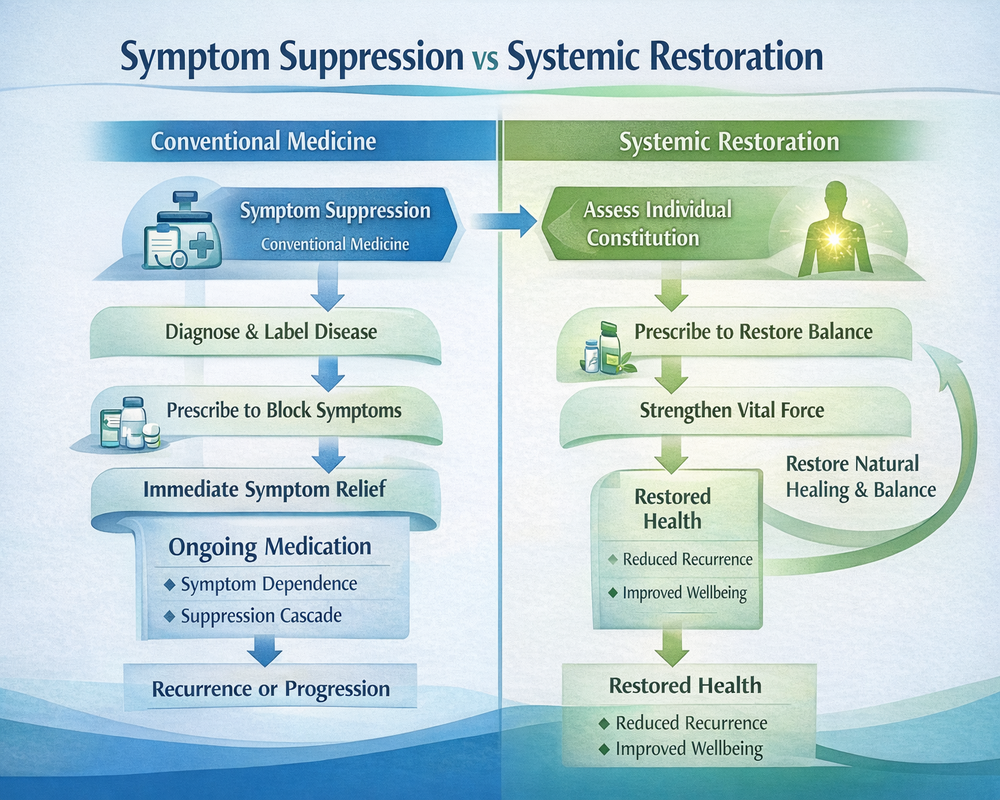
- Longitudinal patient improvement rather than isolated symptom suppression
- Reproducibility across patients with similar constitutional profiles
Unlike conventional medicine, which often isolates diseases from the individual, homeopathy evaluates the whole organism—mental, emotional, and physical—as an integrated system.
2. Individualization as a Scientific Variable, Not a Weakness
One of the most frequent criticisms of homeopathy is its insistence on individualized treatment. From a homeopathic standpoint, this is not a flaw but a core scientific variable.
Two patients with the same medical diagnosis may receive entirely different remedies based on:
- Symptom expression
- Modalities (aggravations and ameliorations)
- Emotional and mental state
- Personal and family history
- Disease progression and vitality
In conventional research models, individual variation is often minimized to achieve statistical uniformity. In homeopathy, individual variation is the primary data.
3. Why Conventional RCT Models Are Often Inadequate
Randomized controlled trials are powerful tools within their intended domain. However, their application to homeopathy faces inherent limitations:
- Remedies are not prescribed uniformly for a disease label
- Outcomes are not immediate biochemical changes but gradual systemic regulation
- Chronic cases require long observation periods
- Symptom shifts follow directional laws rather than linear suppression
This mismatch does not invalidate homeopathy; rather, it highlights the need for methodological pluralism in science, where different systems are assessed using tools appropriate to their nature.
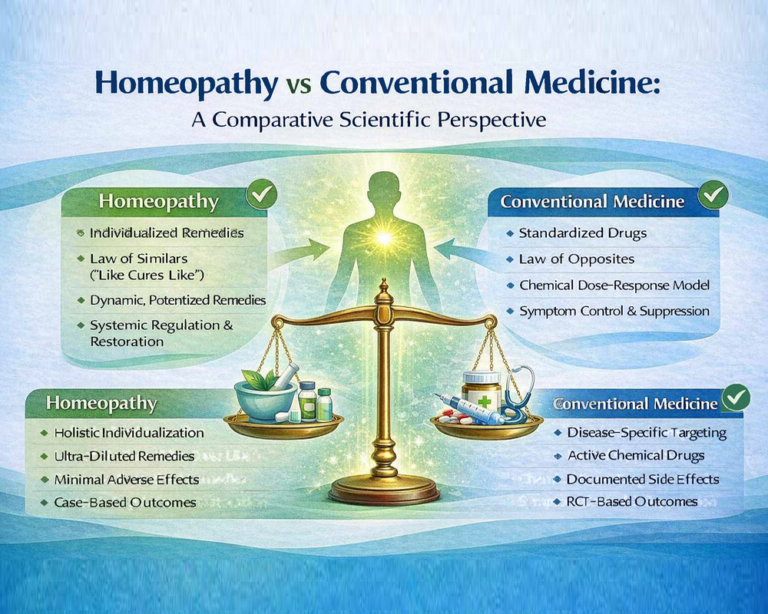
Comparison Table: RCT Model vs Homeopathic Clinical Model
| Aspect | Conventional RCT Model | Homeopathic Clinical Model |
| Scientific Basis | Pharmacology and biochemistry | Vital dynamics and systemic regulation |
| Primary Objective | Symptom reduction and disease control | Restoration of balance and overall health |
| Treatment Approach | Standardized drug for a diagnosed condition | Individualized remedy for the whole person |
| Role of Diagnosis | Central to treatment selection | Secondary to symptom totality and constitution |
| Patient Variability | Minimized to achieve statistical uniformity | Core variable and primary data point |
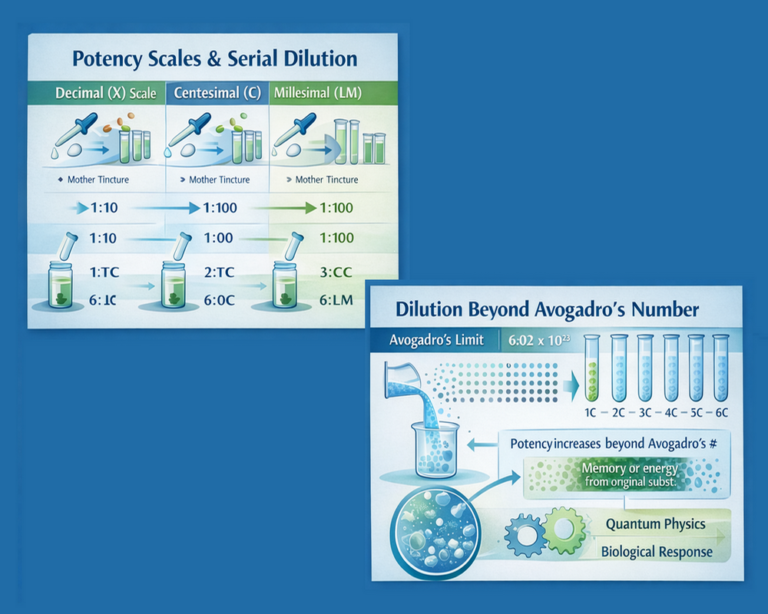
| Dose–Response Relationship | Linear and material (more dose → stronger effect) | Non-linear and dynamic (potency over quantity) |
| Intervention Type | Chemical suppression or replacement | Stimulation of self-regulatory healing response |
| Research Design | Randomized, blinded, population-based | Observational, longitudinal, case-based |
| Outcome Measurement | Short-term measurable endpoints | Long-term functional and systemic improvement |
| Reproducibility | Statistical reproducibility across populations | Clinical reproducibility across similar constitutions |
| Chronic Disease Evaluation | Often limited-duration trials | Long-term follow-up over months or years |
| Handling of Side Effects | Managed as secondary outcomes | Considered indicators of remedy suitability |
| View of Placebo | Control factor to be eliminated | Not applicable due to individualized prescribing |
| Role of Practitioner | Protocol-driven prescriber | Central clinical observer and decision-maker |
| Ethical Focus | Disease management and risk mitigation | Minimum intervention and organ preservation |
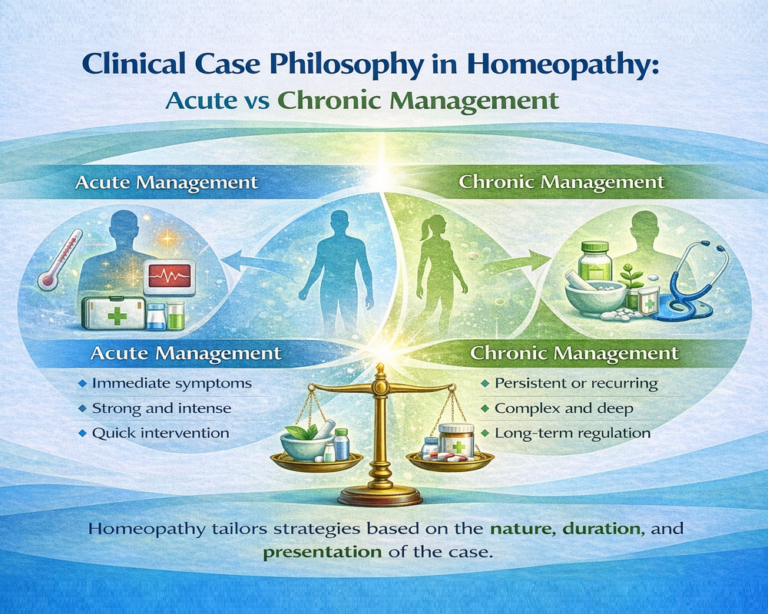
| Scope of Application | Acute, emergency, structural pathology | Functional, chronic, and preventive care |
| Approach to Surgery | Early when pathology is confirmed | Recommended when structural damage is irreversible |
4. Clinical Outcomes vs Statistical Outcomes
Homeopathy places emphasis on clinical outcomes that matter to patients, including:
- Reduction in frequency and intensity of illness
- Improved energy, sleep, and emotional stability
- Reversal of chronic disease trends
- Reduced dependence on long-term medications
- Delayed or avoided surgical interventions where possible
These outcomes are often documented through:
- Case histories
- Follow-up records
- Before-and-after symptom mapping
- Longitudinal observation across years
While such evidence may not always fit neatly into statistical abstraction, it represents real-world therapeutic success.
5. Direction of Cure and Internal Consistency
A unique contribution of homeopathy to medical science is its articulation of laws governing healing, most notably Hering’s Law of Cure, which describes predictable patterns such as:
- Healing from within outward
- From more vital organs to less vital ones
- From deeper levels to superficial symptoms
- In reverse order of symptom appearance
The repeated observation of these patterns across countless cases strengthens the internal coherence of homeopathy as a scientific system.
6. Global Practice and Institutional Integration
Homeopathy is not an isolated or fringe practice. It is:
- Integrated into national healthcare systems in several countries
- Taught in universities and regulated by professional councils
- Practiced by qualified physicians alongside conventional medicine
- Recognized by the World Health Organization as a traditional medical system
Importantly, responsible homeopathic practice does not oppose surgery or emergency medicine. Structural pathology, trauma, and life-threatening conditions are referred promptly. Homeopathy’s role is to restore function early, before irreversible damage necessitates removal or invasive intervention.
7. Ethical and Scientific Positioning of Homeopathy
Homeopathy operates under a conservative therapeutic ethic:
- Use the minimum intervention necessary
- Avoid unnecessary suppression
- Respect the body’s self-regulatory intelligence
- Preserve organs and function wherever possible
This ethical stance aligns with modern concerns about overtreatment, polypharmacy, and chronic dependency on medication.
Conclusion
Homeopathy evaluates evidence not through molecular concentration alone, but through systemic restoration, consistency of outcomes, and long-term patient wellbeing. While modern science often prioritizes measurable material quantities, homeopathy operates within a dynamic biological framework where regulation, balance, and vitality define health.
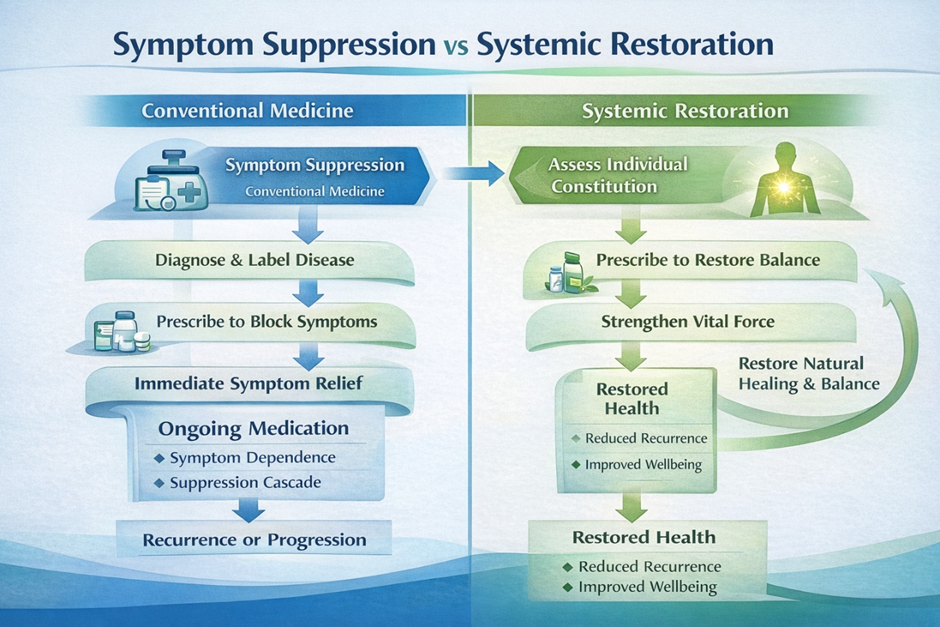
This does not place homeopathy outside science. Rather, it situates it within a different scientific tradition—one grounded in observation, clinical logic, and individualized care. As medicine continues to evolve, a broader understanding of evidence may allow diverse medical sciences to coexist, complement, and ultimately serve patients more holistically.
About the Author