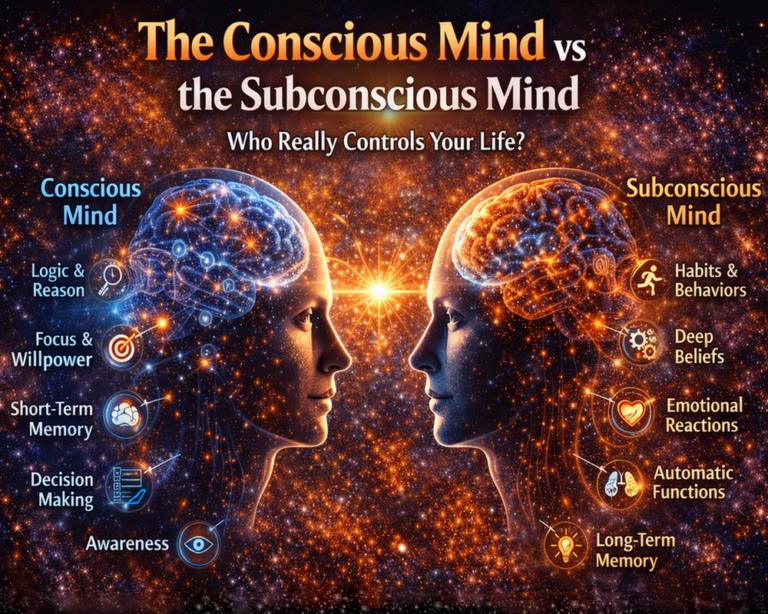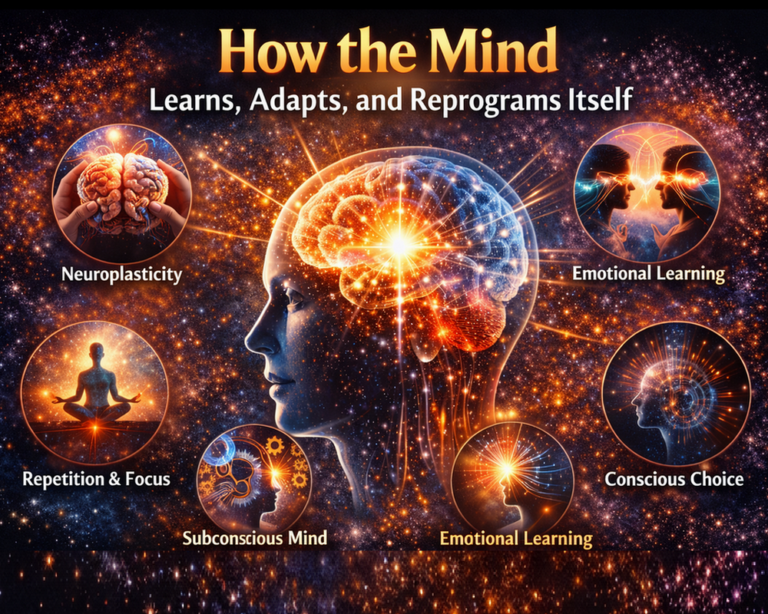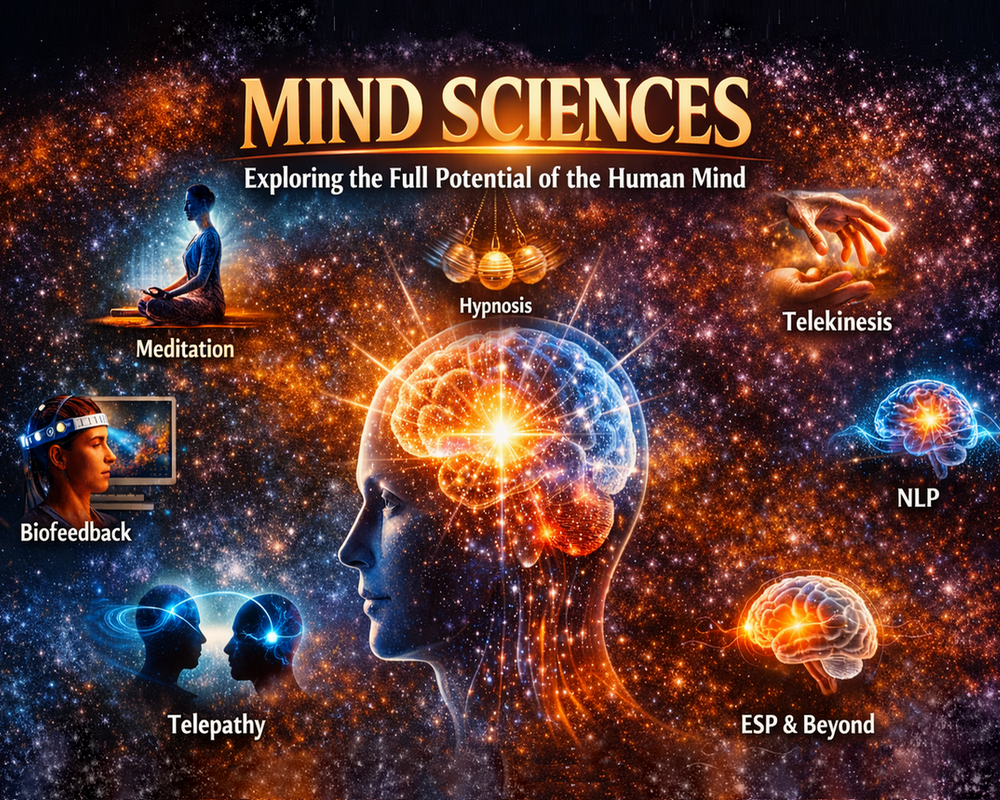
Mind Sciences is an interdisciplinary field dedicated to understanding the human mind, consciousness, emotions, cognition, and behavior. It integrates knowledge from neuroscience, psychology, cognitive science, philosophy, and applied mental practices to study how the mind functions, how it can be trained, and how human potential can be enhanced.
Meditation
Meditation is a structured practice aimed at cultivating focused attention, self-awareness, and emotional regulation. It reduces stress, improves cognitive clarity, strengthens neural connections, and fosters resilience, making it one of the most widely studied and practiced techniques in Mind Sciences.
Mindfulness
Mindfulness is the practice of maintaining non-judgmental awareness of the present moment. It overlaps with meditation but emphasizes conscious attention in everyday activities, promoting emotional balance, stress reduction, and heightened clarity of thought.
Hypnosis
Hypnosis is a guided mental state of focused attention and heightened suggestibility. It is applied to modify behavior, reduce stress, improve habits, and access subconscious patterns for personal growth and therapeutic purposes.
Silva Mind Control
Silva Mind Control is a self-development methodology that trains the mind in relaxed alpha brainwave states. Through visualization, mental programming, and guided relaxation, it enhances intuition, creativity, problem-solving, and goal achievement.
Neuro-Linguistic Programming (NLP)
NLP studies the interaction between thought, language, and behavior. It provides strategies to reshape limiting beliefs, improve communication, model successful patterns, and achieve personal and professional goals effectively.
Telepathy
Telepathy explores the theoretical transmission of thoughts or emotions between individuals without conventional sensory channels. Though not scientifically validated, it is studied philosophically to understand empathy, intuition, and subtle cognitive connections.
Telekinesis (Psychokinesis)
Telekinesis refers to the supposed ability to influence physical objects through mental intention. While experimental validation is lacking, it is conceptually examined in Mind Sciences to explore the limits of human focus, intention, and consciousness.
Biofeedback and Neurofeedback
These techniques use technology to provide real-time feedback on physiological or neural activity. They help individuals regulate stress, brainwave patterns, and cognitive performance, providing a scientific basis for mental optimization.
Lucid Dreaming
Lucid dreaming is the practice of becoming aware within a dream. It is used for creativity, problem-solving, subconscious exploration, and personal insight, offering a unique method for understanding the mind during sleep states.
Energy and Consciousness Practices
Practices such as Qi Gong, Reiki, and Pranic Healing explore the interaction between mental states, intention, and subtle energy fields. They aim to enhance well-being, focus, and consciousness through mind-body-energy integration.
Visualization and Creative Mental Imagery
Visualization involves deliberately imagining goals, desired outcomes, or problem-solving scenarios. It enhances performance, creativity, motivation, and mental rehearsal for real-world success.
Cognitive Behavioral Techniques
Cognitive Behavioral Techniques (CBT) involve structured methods to identify and reframe unhelpful thought patterns. They improve emotional regulation, decision-making, mental resilience, and behavioral outcomes.
Flow States
Flow states refer to optimal states of consciousness where individuals experience peak performance, creativity, and immersion in activity. Achieving flow involves mental focus, clarity, and alignment between skills and challenges.
Extrasensory Perception (ESP)
ESP covers intuitive awareness, precognition, and other psychic phenomena. While largely speculative, it is explored experimentally or philosophically within Mind Sciences to examine the potential boundaries of human perception and intuition.
Mental Modeling and Meta-Cognition
Mental modeling and meta-cognition involve understanding, monitoring, and controlling one’s own thought processes. These skills improve strategic thinking, learning efficiency, problem-solving, and conscious decision-making.
Subconscious Programming
Subconscious programming encompasses techniques such as affirmations, hypnosis, and Silva Mind Control exercises to influence subconscious beliefs and habits. It is applied to enhance personal growth, behavior change, and mental conditioning.
Summary
Mind Sciences is a comprehensive exploration of the human mind, combining evidence-based practices with philosophical and experimental inquiry. Techniques such as meditation, mindfulness, hypnosis, Silva Mind Control, NLP, biofeedback, and cognitive-behavioral methods provide practical tools to optimize mental performance, emotional balance, and personal growth. Exploratory domains like telepathy, telekinesis, ESP, lucid dreaming, and energy-based practices expand understanding of the mind’s potential and the boundaries of human consciousness. By integrating these diverse aspects, Mind Sciences offers a holistic framework for understanding, training, and enhancing the capabilities of the human mind.
About the Author